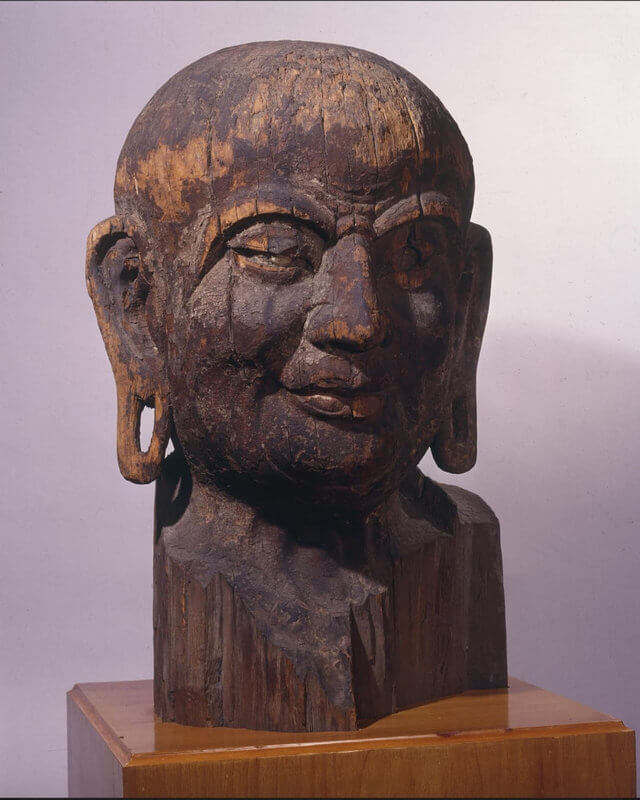
Head of Kasyapa, wood, Tang (A.D. 618-907) H. 77 cm.
Distinguished Scholar Award
2025 Honoree: Jay Xu
Xu Bio
2020 (awarded in 2022) Honorees: Jessica Rawson and Dr. George J. Y. Fan
Rawson Bio • Fan Bio
2017 Honoree: Maxwell (Mike) K. Hearn
Hearn Bio
2015 Honorees: Jerry Yang and Chen Kelun
Yang Bio • Kelun Bio
2013 Honoree Michael Sullivan
Sullivan Bio
2011 Honoree Mark Wilson
Wilson Bio
2009 Honoree Wu Hung
Hung Bio
Newsletter Announcement [PDF, 351kb]
2007 Honoree James C.Y. Watt
Watt Bio
Press Release, 3/20/2007
Newsletter Announcement [PDF, 350kb]
2004 Honoree Wai Kam Ho
Ho Bio
Ho Remarks on Connoisseurship
Ho Publication Credits
Photographs, 8/11/2004
Press Release, 8/11/2004
2002 Honoree Ma Chengyuan
Press Release, 10/1/2002
The purpose of the Distinguished Scholar Award is to recognize and honor achievement for distinguished contributions to the study and preservation of Chinese art and in recognition of lifetime achievement. Awarded every two years, honorees are given a $10,000 cash grant and engraved crystal medallion. Candidates include Chinese art history scholars, curators, museum directors, in China or abroad. The recipient is invited to collect the award in person, and deliver remarks at an award ceremony which may be held in China at the Shanghai Museum, or in New York City. The recipient will be chosen by the AFSM Directors with the counsel of advisors, from among nominations submitted by letter from persons associated in some way with Chinese art. When possible, the Shanghai Museum and the AFSM will coordinate a joint announcement in China and the United States.
Dr. Jay Xu
2025 Honoree Dr. Jay Xu
The Barbara Bass Bakar Director and CEO, Asian Art Museum of San Francisco
Dr. Jay Xu has had forty years of international museum experience as a research scholar, curator, and museum director, having previously worked at Shanghai Museum, the Metropolitan Museum of Art, New York, Seattle Art Museum, and the Art Institute of Chicago before he became the first Chinese American director in a major US art museum in 2008.
Dr. Xu earned his PhD at Princeton University. His academic work has earned a number of awards, including the prestigious Shimada Prize for Outstanding Publication in East Asian Art. The diverse range of Chinese art exhibitions that he curated include the landmark exhibition Treasures from a Lost Civilization: Ancient Chinese Art from Sichuan, which featured the lost civilization of Sanxingdui, the primary subject of his research. As a museum director, he spearheaded to successful conclusion by 2020 the Transformation Project at the Asian Art Museum, which involved facility expansion and renovation and artistic innovation, all underwritten by a $100 million campaign that he led.
In 2010, Dr. Xu was elected a member of Committee of 100, a Chinese American leadership organization. In 2015, he became the first museum director of Asian descent elected to the American Academy of Arts and Sciences founded by the second president John Adams in 1780.
In 2022, Dr. Xu was appointed to serve on the US Congressional Commission to Study the Potential Creation of a National Museum of Asian Pacific American History and Culture. In 2024, Dr. Xu was elected to the governing board of the American Alliance of Museums, which is the only organization in the United States representing the entire museum field.
Jessica Rawson
2020 Honoree: Jessica Rawson
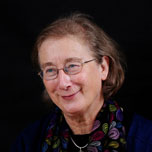 Jessica Rawson had a long career at the British Museum. She moved to Oxford University in 1994 where she was elected as the Warden of Merton College. She is also Professor of Chinese Art and Archaeology at the University of Oxford. She is a Fellow of the British Academy and was made a Dame by her Majesty the Queen in recognition of her work on Asia. She has been a member of several major boards in Britain and holds honorary professorships at several universities, including most recently Peking University. She is also a Fellow of the American Academy.
Professor Rawson has published extensively on early China, specializing at first on ancient Chinese bronzes and jades. In her years in the British Museum and subsequently, Professor Rawson organized several major exhibitions, Chinese Jade from the Neolithic to the Qing and Mysteries of Ancient China; China: The Three Emperors 1662-1795; Treasures of Ancient Chinese, Bronze and Jades from Shanghai. She also made major contributions to exhibitions of the Qin dynasty Terracotta Warriors at the British Museum, 2006-2007 and at the Museum of Far Eastern Antiquities at Stockholm, 2010.
Over the last ten years, Jessica Rawson has turned to a new area, namely early China’s interaction with the peoples of the borderlands and the steppe. On this project she has collaborated both with archaeologists and researchers in China and with Russian scholars. This work has involved extensive visits to the north and west of China and to Siberia and Mongolia as well as St. Petersburg and Moscow.
Dr. George J. Y. Fan
2020 Honoree Dr. George J. Y. Fan
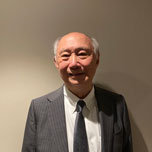
Dr. George J. Y. Fan is a physicist by training. After receiving his Ph.D., he worked with IBM Research for thirty years. His research was specifically focused on science and computer-related technology.
Over the years he has been influenced by his talented wife Katherine. Her creativity inspired him to develop a serious interest in art.
From the mid 1980’s, Dr. Fan focused his attention on ancient Chinese art, with a particular interest in fine ceramics and ancient bronzes. He began to form a collection of items in these two areas, as well as donate many pieces of his collection to various museums.
Recently, some of his gifts – nine inscribed Western Zhou bronzes – were put on display at the Chinese National Museum in Tiananmen Square in conjunction with the 70th anniversary celebration of the formation of the People’s Republic of China.
For the last four years, he has been working on a project to revisit the catalog of the Qianlong Emperor’s archaic bronze collection – Xi Qing Gu Jie.
Maxwell (Mike) K. Hearn
2017 Honoree Maxwell (Mike) K. Hearn
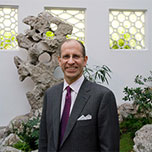 Douglas Dillon Chairman of the Department of Asian Art
Metropolitan Museum
Maxwell (Mike) K. Hearn, Douglas Dillon Chairman of the Department of Asian Art at the Metropolitan Museum, joined The Met in 1971 to help oversee the expansion of the Chinese art collection and the addition of new exhibition spaces. Previous positions at The Met include the Douglas Dillon Curator for Chinese Painting and Calligraphy as well as roles as a curatorial assistant, research associate and assistant curator. Since 2011 he has served as department chair. In addition to overseeing The Met’s expansion of the collection of Chinese art Mike was involved in major additions to many permanent gallery spaces, including the Astor Chinese Garden Court and the Douglas Dillon Galleries, both completed in 1981, and the renovated and expanded galleries for Chinese Painting and Calligraphy, which opened in May 1997. Mike has curated more than 50 exhibitions, authored or contributed to numerous catalogues, and taught graduate and undergraduate seminars on Chinese painting at Yale, Princeton, Columbia, and the New York University Institute of Fine Arts. He earned his BA from Yale University and his PhD from Princeton University, and was elected fellow at the American Academy of Arts and Sciences in 2014.
Jerry Yang
2015 Honoree Jerry Yang
Founding Partner
AME Cloud Ventures
Entrepreneur Jerry Yang co-founded Yahoo! Inc. in 1995 and served on the Board of Directors until January 2012. Mr. Yang also served as a member of the executive management team. While at Yahoo he led a number of initiatives, including two of the biggest investments in the internet: Yahoo Japan and Alibaba Group. Yang holds B.S. and M.S. degrees in electrical engineering from Stanford University. He is widely recognized as a visionary and pioneer in the internet technology sector, and was named one of the top 100 innovators in the world under the age of 35 by the MIT Technology Review in 1999.
Mr. Yang served as a director of Yahoo Japan Corporation (TSE: 4689) and Alibaba Group until January 2012 and a director of Cisco Systems, Inc. (NASDAQ: CSCO) from July 2000 to November 2012.
Mr. Yang currently works with and invests in technology entrepreneurs through AME Cloud Ventures, his innovation investment firm. Mr. Yang also serves as a director on the boards of Workday Inc., Lenovo, and Alibaba Group.
Mr. Yang and his wife, Akiko Yamazaki, are well known philanthropists who focus on higher education, conservation and the arts. Mr. Yang serves as a Vice-Chair of Stanford University’s Board of Trustees, a Director of Dunhuang Foundation (USA), and a Director for Monterey Peninsula Foundation. Mr. Yang is a member of the Committee of 100, as well as a member of the Council on Foreign Relations.
Chen Kelun
2015 Honoree Chen Kelun
Deputy Director
Shanghai Museum
Chen Kelun is curator and Deputy Director of the Shanghai Museum, Adjunct Professor at Fudan University and a member of the committee of the National Commission for Cultural Relics Identification. He studied archeology in university and worked in Zhejiang Provincial Museum as a research fellow in cultural relics after graduation. Later he obtained a Masters degree from Fudan University under the instruction of Prof. Want Qingzheng, a celebrated expert in the Chinese ancient ceramics community. In 1990 he began his work at the Shanghai Museum.
Chen is an outstanding scholar in the museum field. He possesses extensive and thorough professional theories, strong study and research capacity, and has conducted systematic studies on cultural relics, archeology and museology. In particular, Chen is fully devoted to the study of Chinese ancient ceramics. He is also widely-experienced in organizing museum exhibitions.
Chen has published papers in various academic fields, including the study of Chinese ancient ceramics, archeology, history, cultural and museology. His innovative opinions have been widely recognized in his field.
Since 1996, Chen has been the organizer and curator of nearly one hundred exhibitions held in the Shanghai Museum, which were warmly welcomed by audiences and highly praised by experts. Chen gives courses on cultural relics and museology, such as the history of ancient Chinese ceramics and museology basics, in Fudan University and Shanghai Jiao Tong University. Some of his students have now become directors of several important Chinese museums.
In September 1998, Elysée Palace Paris, Chen was awarded the Ordre National du Mérite, le Président de la République Française by Chirac, the former French president, to commend his important contribution to the cultural relics study and the development of Chinese museum causes.
Michael Sullivan
2013 Honoree Michael Sullivan
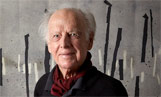
Michael Sullivan standing in front of Walking, 2006, by Wang Huaqing, a painting from his collection of Chinese art. Photograph: David Gowers/Ashmolean Museum/ University of Oxford.
Leading art historian for whom China became a life’s work
By Alex Danchev and Shelagh Vainker
The Guardian, Friday 25 October 2013
The art historian Michael Sullivan, who has died aged 96, was one of the most distinguished experts in the field of Chinese art. He had a matchless personal experience of the civilisation that became his life’s work, and amassed the leading private collection of modern Chinese art outside the country.
From his first visit to China in 1940 to his last in 2013, he forged and maintained friendships with generations of artists. This was not easy after the founding of the People’s Republic in 1949, and it was not until 1973 that he was able to meet again friends with whom he had been unable even to correspond during the Cultural Revolution. In that period, Michael worked and travelled throughout south-east Asia and the Pacific, acquiring a rare pluralism in his perspective on Chinese art, and he remained outspoken in his support of artistic freedom.
His tireless promotion of the understanding of China in the west, as a teacher, writer, traveller and collector, was honoured with the exhibition Michael Sullivan and Twentieth-Century Chinese Art at the National Art Museum of China in Beijing in 2012.
He was born in Toronto, the youngest of five children of Alan Sullivan, a Canadian mining engineer turned prolific novelist (under the pen name Sinclair Murray) and his indomitable wife Elisabeth (nee Hees). The family moved to Britain when Michael was three, and set about educating him as a model Englishman, with only partial success. At prep school (Fonthill, in East Grinstead) and public school (Rugby), he was caned for idleness; at Corpus Christi College, Cambridge, he drifted through a degree in architecture (1936-39).
He lacked direction, but not conviction. A declared pacifist, he heard in autumn 1939 that the Quakers were recruiting a small team to go to China to drive trucks for the International Red Cross. He left the following February, in his own words, “long before the fighting started … and before the tribunals had been set up to test the sincerity of conscientious objectors”. For two years, he drove medical supplies between cities in south-west China under bombardment from the Japanese. In 1942, he settled in Chengdu, working at the museum of the West China Union University.
There, the Paris-trained painter Pang Xunqin introduced Michael to Chinese painting and also to many of the artists in Sichuan at that time. In 1943 he married Wu Baohuan, a bacteriologist, who became known as Khoan Sullivan. She devoted the rest of her life to his work.
In 1946 Michael and Khoan returned to London and he began his formal study of the language, history and art of China at the School of Oriental and African Studies (Soas). Moving to Harvard in the US, he completed his PhD in 1952, and embarked on an academic career, first as lecturer in art history and curator of the art museum (which he founded) at the University of Malaya in Singapore. After a stint as lecturer in Asian art at Soas came the breakthrough: in 1966 he was appointed professor of oriental art at Stanford University in California.
Khoan’s outgoing nature, together with her Chinese nationality, opened possibilities for Michael that resulted in a groundbreaking book, Chinese Art in the Twentieth Century (1959). Based on conversations and correspondence with leading artists of the 1920s onwards, it was the first on the subject, in any language. Other books quickly followed. A Short History of Chinese Art (1967) went into its third edition as The Arts of China in 1973. The fifth edition is still in print, and, indefatigable, Michael had all but completed the sixth.
No western scholar had a wider acquaintance than Michael among Chinese artists. His commitment to a sympathetic understanding of artists as individuals, rather than products of their environment, never wavered. Many of these artists gave him examples of their work. So began the Khoan and Michael Sullivan Collection of Modern Chinese Art – an accidental collection, as Michael liked to say, formed mostly of gifts and only latterly of purchases as well. The collection is broad and rich, including ink paintings by Zhang Daqian (several from the 1960s with dedicatory inscriptions to Khoan) and Qi Baishi, and woodblock-printed works by Huang Yongyu and Xu Bing. Michael remained at Stanford until 1984, when he returned to England as a fellow of St Catherine’s College, Oxford. In 1990 he became an emeritus fellow, but retirement was foreign to him. He remained active, surrounded by his research assistants (the “little animals”, as he called them fondly), until the end. Khoan died in 2003. The Sullivan Collection is due to become part of the permanent collection of the Ashmolean Museum in Oxford.
•Donovan Michael Sullivan, art historian, born 29 October 1916; died 28 September 2013
Source: The Guardian
Marc F. Wilson
2011 Honoree Marc F. Wilson
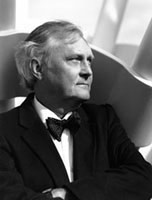 Retired Director of the Nelson-Atkins Museum of Art, Kansas City, MO
Marc F. Wilson came to The Nelson-Atkins Museum of Art in 1971 as Associate Curator of Chinese Art. He was named Curator of Oriental Art in 1973 and served as Menefee D. & Mary Louise Blackwell Director/CEO of the institution from 1982 to 2010.
Wilson received his B.A. in European history from Yale in 1963 and his M.A. in history of art from Yale in 1967, with a concentration in Chinese studies and Asian art history. His first experience at the Nelson-Atkins came through a Ford Foundation grant, which took him to the Museum from 1967 to 1969 and enabled him to study with Laurence Sickman, one of the leading authorities for Chinese studies in the United States. Another Ford Foundation grant enabled Wilson to travel to Japan, Hong Kong and Taiwan from 1969 through 1971. In Taiwan, he worked for two years as a translator and project coordinator at the National Palace Museum in Taipei, which houses the Imperial collection taken from the mainland by Chiang Kai Shek when the Nationalists fled following the Communist victory. He returned from Taipei to Kansas City at the invitation of Laurence Sickman, who offered him the position of Associate Curator.
Wilson’s many publications include the exhibition catalog Friends of Wen Cheng-Ming (1974), of which he was co-author; the catalog The Chinese Exhibition (1975), which he edited for the landmark Exhibition of Archaeological Finds of the People’s Republic of China, shown in Kansas City and San Francisco; Eight Dynasties of Chinese Painting (1980), a scholarly exhibition catalog of which he was co-author; and numerous articles published in journals including Apollo, The Connoisseur, Asian Culture Quarterly, and Museum (Tokyo).
Wilson has served on numerous civic committees in Kansas City including those involving race relations and urban development. A native of Akron, Ohio, Wilson is married to Elizabeth Marie Fulder and lives on a working farm near Weston, Mo. His hobbies include farming and amateur automobile racing through the Sports Car Club of America.
Wilson retired as the Museum’s fourth director on June 1, 2010. As a dean of the art world, his advice and counsel are often sought on matters concerning museums, collecting, culture and society in general.
Wu Hung
2009 Honoree Wu Hung
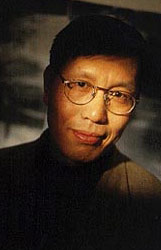
University of Chicago, Director, Center for the Art of East Asia, painter and scholar of contemporary Chinese painting
University of Chicago
- Harrie A. Vanderstappen Distinguished Service Professor of Art History, East Asian
- Languages & Civilizations, and the College
- Director, Center for the Art of East Asia
- Consulting Curator, Smart Museum of Art
Biography
Wu Hung specializes in early Chinese art, from the earliest years to the Cultural Revolution. His special research interests include relationships between visual forms (architecture, bronze vessels, pictorial carvings and murals, etc.) and ritual, social memory and political discourses. Also the consulting curator for the Smart Museum of Art, Hung is the author of Transience: Chinese Experimental Art at the End of the Twentieth Century (University Of Chicago Press, 1999), Monumentality in Early Chinese Art (Stanford University Press, 1995), Three Thousand Years of Chinese Painting (Yale University Press, 1997), and the forthcoming Remaking Beijing: Tiananmen Square and the Creation of a Political Space. Hung grew up in Beijing and studied at the Central Academy of Fine Arts in Beijing. From 1973 to 1978 he served on the research staff at the Palace Museum, located inside Beijing’s Forbidden City. He came to Chicago in 1994.
James C. Y. Watt
2007 Honoree James C. Y. Watt
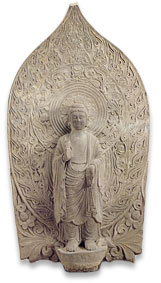
Buddha, stone, Northern Qi, A.D 550-577.
2007 Chinese Art History Distinguished Scholar Award Conferred by The American Friends of the Shanghai Museum, March 20, 2007
I think on such occasions one should reminisce a little and think ahead a little. About thirty years ago I was reading Kenneth Clark’s autobiography (or the first of two), then just published, called Another Part of the Wood. I was struck by one line fairly early on in this book, in which he said: “My whole life might be described as a long, harmless confident trick.” I thought then, what a wonderful way of being modest. Thinking back now, it may have been more than that. There might have been a hidden meaning, conscious or not, behind that statement. He might have had a premonition that times were going to change and the approach to art history was about to change as well. Perhaps that is what is behind the rather unexpected quote (from W. B. Yeats) he made at the end of his book, Civilization: “The best lack all conviction, and the worst is full of passionate intensity.” Kenneth Clark may nor may not have known Adorno and the critical theorists and that “theory” was about to take over the field of art history — at least in academia, and that those of us who continue to work in museums would find ourselves in a state of siege, with theoretical art history on one side and crusading archaeologists on the other. How that is going to end, I shall not predict. I can only hope that eventually there will be some degree of mutual accommodation. Otherwise, the prophets who proclaim the end of art history, and that of art altogether, will have their prophecy fulfilled.
Closer to our own field of Asian art history, and that of Chinese art in particular, there is another kind of schism—and it has a long history. About this time, in the last century, there were two people with good claims to be experts in Chinese art. One was John Ferguson, who lived in China, was learned in Chinese, and acted as advisor or consultant to the Metropolitan Museum. Many paintings that entered the Museum’s collection in the early 20th century were recommended by Ferguson, or otherwise sold or given by him. There was Charles Freer who collected on his own account and was consulted by other collectors and museums. Now, their respective approaches to the collecting of Chinese paintings were very different. For Ferguson, if you did not know the Chinese language and literature and could not consult with ease all the catalogues of Chinese collections, particularly those of more recent centuries which recorded each painting and calligraphy in great detail, you are not qualified to collect Chinese paintings. Freer, on the other hand, thought that aesthetic judgment was paramount. If you could not tell the authenticity of a painting by its quality and the period by its style, you should not collect at all. (I have grossly exaggerated their positions for the sake of brevity.) The two of them engaged in a vigorous debate, sometimes public and sometimes acrimonious. It is a particular case of a dichotomy discussed in more general terms by John Pope, Director of the Freer, in a paper (published about 50 years ago) called Sinology or Art History. The problem as stated by Pope remains today. It has been perpetuated by historical events which caused the isolation of China for a period of about half a century. Many Chinese even today think that if you are not brought up in China and steeped in Chinese culture, you can never understand Chinese art. Those who work outside China think that the critical deficiency in the Chinese approach to the study of art is the lack of art history as an academic discipline—and by that I do not mean that the kind of art history that is being practiced at universities in the US and in Europe. It is organizations like the American Friends of the Shanghai Museum that will help to bridge this gap of understanding by providing opportunities for Chinese scholars to visit the States, and eventually we can all work together to mutual benefits. As the great Chinese scholar Wang Guowei, who lived at the end of the Qing dynasty and the beginning of the Republic famously said, “There is no such thing as Western scholarship and no such thing as Chinese scholarship, there is only scholarship.”
I should like to thank the members of the Council of the American Friends of the Shanghai Museum, for the honor they have bestowed on me. But as we all know, museums work in teams, and although I should like to take credit for myself, all I have done is to participate in the work to which every member of the Department of Asian Art contributes. And I have to thank also my colleagues for allowing me to take the credit on behalf of them all. And finally, thank you all for coming this evening.
James C. Y. Watt is
the Brook Russell Astor Chairman
Department of Asian Art
Metropolitan Museum of Art
James C. Y. Watt Press Release
Press Release, 3/20/2007
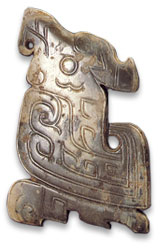
Bird, late Shang, 13th-11th century B.C.
American Friends of the Shanghai Museum Confer Chinese Art History Distinguished Scholar Award
New York City, March 20, 2007 — James C.Y. Watt, received the 2007 Chinese Art History Distinguished Scholar Award from Patricia Pei Tang, President of the American Friends of the Shanghai Museum. She delivered congratulatory remarks on behalf of Director Chen Xiejun of the Shanghai Museum; Architect I.M. Pei spoke to express his appreciation of the honoree’s contributions to his understanding of the modern museum. Collector Eugene V. Thaw introduced Mr. Watt to the scholars, directors, patrons and benefactors associated with the American Friends who gathered to honor him.
James C.Y Watt is the Brooke Russell Astor Chairman, Department of Asian Art at the Metropolitan Museum of Art. Before joining the Met in 1985, he held positions at the Museum of Fine Arts in Boston, the Hong Kong City Museum and Art Gallery and the Chinese University of Hong Kong, where for three years, he was Chairman of the Board of Studies in Fine Arts, as well as curator for the University’s Art Gallery.
In remarks recalling that Mr. Watt organized his “Nomadic Art of the Asian Steppes” exhibition at the Metropolitan Museum of Art, Mr. Thaw recalled “how quietly and subtly James would reveal more and more layers of knowledge … , leaving us amazed, grateful and wondering how much more depth and wisdom was still to come.” He singled out Mr. Watt’s “good manners, knowledge and wisdom in the word ‘civilized,’ he is probably the most civilized man I know.”
In his remarks at the dinner, Mr. Watt delivered a statement about the tension “between the critical theorists and ‘theory’ taking over the field of art history — at least in academia, and those of us who continue to work in museums … find[ing] ourselves in a state of siege, with theoretical art history on one side and crusading archaeologists on the other. How that is going to end, I shall not predict. I can only hope that eventually there will be some degree of mutual accommodation. Otherwise, the prophets who proclaim the end of art history, and that of art altogether, will have their prophecy fulfilled.”
“Closer to our own field of Asian art history, and that of Chinese art in particular, there is another kind of schism” — and it has a long history, he continued. “Many Chinese even today think that if you are not brought up in China and steeped in Chinese culture, you can never understand Chinese art. Those who work outside China think that the critical deficiency in the Chinese approach to the study of art is the lack of art history as an academic discipline — and by that I do not mean that the kind of art history that is being practiced at universities in the US and in Europe. It is organizations like the American Friends of the Shanghai Museum that will help to bridge this gap of understanding by providing opportunities for Chinese scholars to visit the States, and eventually we can all work together to mutual benefits. As the great Chinese scholar Wang Guowei, who lived at the end of the Qing dynasty and the beginning of the Republic famously said, “There is no such thing as Western scholarship and no such thing as Chinese scholarship, there is only scholarship.”
Mr. Watt was accompanied by his wife, Sabine Rewald, The Jacques and Natasha Gelman curator in the Department of 19th-Century, Modern, and Contemporary Art at the Metropolitan Museum of Art.
The $10,000 Chinese Art History Distinguished Scholar Award and engraved crystal medallion, conferred for the first time in 2002, again in 2004 and now for a third time in 2007 to James C.Y. Watt, is awarded to scholars who have made lifetime contributions to the study, exhibition and preservation of Chinese art. Recipients are selected by the Directors of the American Friends from among nominations submitted by professional colleagues in academia, museum departmental curators and others who focus on Chinese Art and Art History. Ma Chengyuan, Director Emeritus of the Shanghai Museum received the first AFSM Chinese Art History Distinguished Scholar Award in 2002. Dr. Wai Kam Ho received the second Award in 2004.
Contact: Patricia Pei Tang [or Ann Brownell Sloane] Phone: 212-861-7799 [or 212-737-1011] Email: PPeiTang@aol.com [or absloane@nyc.rr.com]
Wai Kam Ho
2004 Honoree Wai Kam Ho
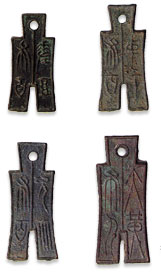
Wang Mang Coinage, Western Han Dynasty, A.D. 8-23.
Personal Information
Wai-kam Ho. Male. Born on March 26th, 1924. Nationality: America. Place of Birth: Guangdong Province, China. Marital status: Married. Two children. Address: 320 Fort Duquesne Blvd. Gateway Towers, unit 12-A Pittsburgh, PA 15222, U.S.A.
Educational and Professional History
- Lingnan University (B. A., 1947)
- Graduate Study Yenching University, Institute of History (1947-48)
- Research Assistant to Professor Ch’en Yin-k’o, Lingnan University (1949)
- Harvard University (M.A., 1953), only candidate for the Special Joint Program for Ph.D. in Chinese History and Asian Art, jointly offered by Department of Far Eastern Languages and Department of Ari History (1951-1958)
- Curator of Oriental and Chinese Art at Cleveland Museum of Art, Ohio (1959-1983)
- Laurence Sickman Curator of Chinese Art at the Nelson Akin Museum, Kansas City (1984-1994)
- Visiting and Adjunct Professor at Harvard University (1976), Case Western Reserve University (1962-1983), and University of Kansas (1984-1992)
- Oversea Fellow of Institute of Chinese Culture, Hong Kong Chinese University (1988)
Honors
- Received the inaugural Shimada Prize for the Most Important Publications which contribute significantly to the Study of Chinese Art and Asian Culture (1992, Tokyo)
- Received the 2004 Distinguished Scholar Award in Chinese Art History established by the American Friends of the Shanghai Museum “to recognize his lifetime achievement as the premier curator in America of Chinese Art.”
- Invited by Beijing Palace Museum as Guest Curator (2004, Beijing) Invited by Shanghai Museum as Guest Curator (2004, Shanghai)
Publications
- Books in English and Japanese include Chinese Art under the Mongols with Sherman E. Lee (1968), Four Masters of Late Yüan (in Japanese 1972), Eight Dynasties of Chinese Painting (1980), The Century of Tung Ch ‘i Ch ‘ang (1992).
- Articles in English, Chinese, and Japanese including the most recent ones: “The Trubner Stele in Metropolitan Museum: A Problem of Authentification and Connoisseurship” (2001); “Dipankara Buddha’s Prophecy for Sakyamuni: A Study of Jin Painting at Lzaoning Museum Part l” (2004); “Some Art Historical Problems Concerning the Design and Production of ‘Nacisi’ in the Textile Industry under Straight Governmental Control in Yuan Dynasty” (2004); “‘Wei‘: The First Guiding Principle for Compositional Structure in Early Chinese Painting and the Restoration of Xie He’s) Fifth Law” (2004)
Family
Wife: Wai-ching Ho. Lingnan University (B.A., 1947), Columbia University (M.A., 1950), Harvard University Ed.D. in Psychological and Educational Statistics, 1957). Daughter: Dawn Ho Delbanco. Harvard College (B.A., 1973), Harvard University (Ph.D., 1981), now teaching Chinese Art in Columbia University. Son: Kevin Ho. Harvard College @.A, 1982), Columbia University (M.D., 1988), now teaching at School of Medicine, University of Pittsburgh.
Wai Kam Ho
Wai Kam Ho: Remarks on Connoisseurship
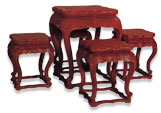
Square table and stools with carved floral design, red lacquer, Qing, 1644-1911.
Before I begin my brief remarks on connoisseurship in Chinese art, especially in painting, I would like to take this opportunity to express my sincere gratitude to the Shanghai Museum and its supportive group, the American Friends of the Shanghai Museum — not only because they saw fit to bestow upon me this great honor of the Award, but also because they have given me a chance that I have been long waiting for to pay my humble respects publicly to three of my great teachers: Professor Benjamin Rowland at the Fogg Museum, who initiated my journey of apprenticeship across the vast virgin land of Asian art, from India through Central Asia, to China and Japan; Professor Kenneth Chen at the Harvard-Yenching, who guided me through my research and shaped my thinking on Chinese, Japanese and European traditions of Buddhist studies; and my mentor, the great historian of modern China, Ch’en Yin-k’o, who secretly arranged to send me to the United States to attend Harvard in order to undertake a career called “art historian” — something I had never heard of before I reached the shores of America at the end of 1950.
Secondly, I would like to draw attention to a few mistakes and omissions in the publications list which will be later revised.
And now, connoisseurship.
In the past twenty years or so, connoisseurship has been at the center of a cultural and intellectual dilemma which has divided the field of art history into bitterly opposing groups: those who are for connoisseurship, and those who are against it. Those who are opposed to traditional connoisseurship denounce it as one of the true signs of cultural elitism — which, in my opinion, is a misplaced criticism, an arbitrary separation of “object” and “theory,” and the kind of moral distortion remarked upon by the poet Su Shih almost a thousand years ago when he said: “Every time a unified field of study is forced to split, the opportunists become more and more clever in disguising their falsehoods.”
I am glad that in fact we have no need to be involved in this endless debate between the traditional connoisseurs and the art theorists — between “what to see” and “how to see.” Nor do we need to adopt wholesale my former esteemed colleague Sherman Lee’s position on the question of whether the eye can be trained to see a work of art as art. He famously came to the negative conclusion that one cannot educate the eye if one is not born with it. This statement is true, but only 75% true. Sherman himself used to call Tung Ch’i-ch’ang a bad painter, not seeing at first the unique qualities in Tung’s paintings. But a few years later, he was willing to pay the highest price ever paid for a Ming painting — for Tung Ch’i-ch’ang’s masterpiece “Ch’ing-pien Mountain.” This act of courage shows that even connoisseurship at its most sophisticated level can be cultivated.
But connoisseurship is only one out of three components that make up the credentials of an art historian. What I remember from the first lecture given by Professor Paul Sachs at Harvard in his legendary graduate course Fine Arts 15a, created in 1922 and entitled “Museum Work and Museum Problems,” still holds true. He defined an art historian as having three roles: art critic first, connoisseur second, and historian of art third. The art critic looks for quality. If, in the first glance at an object, he is not attracted by any sign of quality, he needn’t bother with a second look. The first glance is all-important, because it saves the critic from time and effort wasted on writing long articles on poor copies or dubious works.
Once the object has passed this crucial preliminary test for quality, then the connoisseur may enter in to play his role of scholarly detective, censor and judge. The connoisseur can proceed to ask questions about authenticity, dating, authorship, provenance, and other external elements such as the artist’s seals and signatures, the collectors’ inscriptions, etc.
Finally we get to the third role, that of the historian of art. The job of the art historian is to put all these findings together in the proper historical perspective so that any possible meaning or individual message of the work can be rescued from the dust of time and evaluated in the larger picture of art history.
In China, connoisseurship is still considered a part of traditional Sinology, in particular, a part of chin-shih hsueh, or the study of inscriptions on bronze vessels and stone steles.
An example of this type of study is my recent article on the celebrated Trubner Stele in the Metropolitan Museum of Art, which depends heavily on an exhaustive survey of the local gazetteers from the counties along two rivers between Honan and Shantung provinces as a means of determining the most likely site of the original temple. When I finally identified the name of the temple, Fung-ch’ung tzu, I was then able to reconstruct the history of its major patrons during the late sixth century in the Eastern Wei and Northern Ch’i periods, and compare this history against the inscription on the stele. This comparison not only confirmed my strong doubts about the authenticity of the stele, but also led to a much broadened investigation tracing the footprints of the conspiracy between officials of the local government and forgers and art dealers during the First World War, around 1915.
A specialist in chin-shih hsueh is mainly interested in engraved inscriptions for their documentary value in historical studies, or for their aesthetic value in the study of calligraphy. Too often, however, such a literary approach to connoisseurship tends to be unduly influenced by political or social biases, or religious prejudices. For example, it is not an exaggeration to say that 95% of traditional Chinese connoisseurs do not appreciate or understand figure painting, simply because their Confucianist contempt for religious art prevents them from keeping an open mind. Their ignorance of Buddhist and Taoist painting traditions has left practically a total blank in their understanding of Chinese figural art, including Buddhist and Taoist sculpture. That is why a true scholar-connoisseur in sculpture has become such a rarity in curatorial circles in recent years, and also why questionable pieces of so-called Yun-kang and Lung-men sculpture have become main attractions in auction houses, or even museum galleries.
This is not to say, however, that there is no interest now in religious art. Buddhist iconography is a popular subject of study in university classrooms, but the mechanical application of text-book iconography just creates dead ends for scholarship in the developmental history of Buddhist art. So, for instance, in order to fully understand figural art of the T’ang and Sung periods, a knowledge of dance steps and dance design introduced through Central Asian drama — dramas such as “Sariputra’s Encounter” and “Maitreya’s Meeting,” the texts of which were discovered in Chinese Turkestan some years ago — could prove much more vital to the appreciation of Liu Tsung-yan’s or Liang K’ai’s peculiar movements of the brush than a boring recital of the Tibetan Buddhist code of proportion, or Tun-huang measurement formulas. The great Northern Sung critic Mi Fu had long been aware of such significances though he was later ridiculed for it by the Southern Sung philosopher Chu Hsi.
In short, true connoisseurship lies in the less-than-obvious — so that, small details in a painting such as the relative positions of eyes and eyebrows, the nose ridge and jen-chung, or even the internal structure of the “ear leaf” — these are the seemingly small details in a portrait that could be the most decisive factors in distinguishing an 8th-century T’ang face from its 9th-century variations.
Traditional connoisseurship in the mode of chin-shih hsueh has served me well in my curatorial career, both in its fascination with artists’ and collectors’ seals, and in its insistence on determining the reliability of literary sources. The former helped me to discover some long-forgotten masters such as Lo Tzu-chuan of the Yuan dynasty, who used to be mislabeled as Kuo Hsi — a hanging scroll formerly in the Wang Chi-ch’ien collection and attributed to Kuo Hsi is now relabeled in the Metropolitan Museum.
But the connoisseur’s quest is not always successful. Now I find that I have only a few more minutes left to complain about my frustrations as a failed investigator. One of the most perplexing and puzzling cases involving collector’s seals is one involving the seal which reads “Tsa-ch’en hua-shih chih yin” to be found in Japanese collections of Sung painting. Most Japanese collectors believe that the seal belonged to the Ashikaga family during the Muromachi period. I have been skeptical about this theory for many years, as I firmly believed that the only possible literary source for this seal is a famous letter written by Ch’iu Ch’i to a renegade general in the late fifth century, which contains the four characters on the seal, and which, in the letter, have an implied meaning which is utterly incompatible with the history of an Ashikaga ruler. But what does this knowledge possibly show us about the owner of the seal? I chose this example to illustrate the frustration of a connoisseur whose insights may not always be useful.
On the other hand, some seemingly more complicated cases may prove to be much more ready for an easy solution. For example, the handscroll depicting the theme of the Kuan-yin bodhisattva in the Lotus Sutra is known to be a fine Muromachi copy of a Chinese original. Because the colophon on the painting has been misread and misinterpreted, the name of the original artist was never known, even after the painting was acquired several years ago by the Metropolitan Museum. As a matter of fact, the history of the Fan-lung school of Southern Sung Buddhist painting, written by the poet Lu Yu in 1207, and available in his complete literary works, makes reference to the artist of the Metropolitan painting, Chih-yeh, who belonged to the Fan-lung school.
I have tried to limit my discussion to a very small and relatively unimportant area of connoisseurship, with the hope that it may give some idea both of its endless scope and of the varying degrees of its effectiveness. In order to continue tonight’s discussion, it seems not a bad idea to conduct a seminar at the Shanghai Museum some time this fall during my visit — at which some of you, I hope, will be able to participate. I look forward to it. Shanghai is a wonderful city for a reunion.
Thank you.
Wai Kam Ho
Wai Kam Ho: Publication Credits
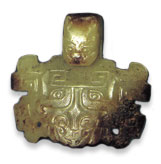
Belt hook with an animal mask, warring states, 475-221 B.C.
Books
Chinese Art under the Mongols: the Yüan Dynasty, 1279-1368. Cleveland: The Press of Case Western Reserve University, 1968.
Eight Dynasties of Chinese Painting: The Collections of the Nelson Gallery-Atkins Museum, Kansas City, and the Cleveland Museum of Art. Bloomington: Indiana University Press, 1980.
The Four Masters of Late Yüan. Tokyo: Chuo Koron-sha, 1985.
The Century of Tung Ch’i-ch’ang, 1555-1636. 2 vols. Seattle: The University of Seattle Press, 1992.
Articles
“Future Buddha Maitreya in a Northern Wei Stele.” The Bulletin of the Cleveland Museum of Art 47 (Oct. 1960): 182-191.
“Hun-p’ing: The Urn of the Soul.” The Bulletin of the Cleveland Museum of Art 48 (Feb. 1961): 26-34.
“Nan-Ch’en Pei-Ts’ui, Ch’en Hung-shou of the South and Ts’ui Tzu-chung of the North.” The Bulletin of the Cleveland Museum of Art 49 (Jan. 1962): 1-11.
“Kao: Myth and Speculations.” The Bulletin of the Cleveland Museum of Art 50 (April, 1963): 71-79.
“Shang and Chou Bronzes.” The Bulletin of the Cleveland Museum of Art 51 (Sept. 1964): 173-188.
“Scattered Pearls beyond the Ocean: Chinese Album Paintings in the Cleveland Museum of Art.” With Sherman E. Lee. Cleveland: The Cleveland Museum of Art, 1964.
“Three Seated Stone Buddhas.” The Bulletin of the Cleveland Museum of Art 53 (April, 1966): 83-103.
“Notes on Chinese Sculpture from Northern Ch’i to Sui; Part I: Two Seated Stone Buddhas in the Cleveland museum.” Archives of Asian Art 22 (1968-1969): 6-55.
“Tung Ch’i-chang’s New Orthodoxy and the Southern School Theory.” Artists and Traditions: Uses of the Past in Chinese Culture. Christian F. Murck ed. Princeton: Princeton University Press, 1976. 113-29.
“Religious Paintings.” Traditional and Contemporary Painting in China. Washington D.C.: National Academy of Science, 1980. 22-34.
“Late Ming Literati: Their Social and Cultural Ambience.” The Chinese Scholar’s Studio: Artistic Life in the Late Ming Period. New York: Thames and Hudson,1987. 23-36.
“The Literary Concept of ‘Picture-like’ (Ju-hua) and ‘Picture-Idea’ (Hua-i) in the Relationship Between Poetry and Painting.” Words and Images: Chinese Poetry, Calligraphy, and Painting. Princeton: Princeton University Press, 1991. 359-404.
“The Preaching Buddha” Possessing the Past: Treasures from the National Palace Museum, Taipei. New York: The Metropolitan Museum of Art, 1996. 201-218.
“The Trubner Stele in Metropolitan Museum: A Problem of Authentification and Connoisseurship” Kaikodo Journal (Tokyo), 2001.
“A Biography of Li Ch’eng.”
Sherman Lee. “Liang Ch’ing-piao.” 1981, 101-158.
“Introduction to the Literati Painting in Yüan Dynasty.” 1983, 243-257 (Also published in 1950-1987), 1992, 274.
“A Brief Study of Tan-yen lao-ren Chang Ch’ing, the Southern Sung Collector and Art Historian.”
“Postcript to the Handscroll by a Chin Dynasty Painter ‘Dipankara’s Prophecy for the Coming Buddha Sakyamuni.'”
“The Original Meaning of ‘Haboku.'” Museum No. 379, 1982.
“Tung Ch’i-ch’ang’s Transcendence of History and Art.”
“A Biography of Li Ch’eng.”
Articles on “Wang Wei” and “Mi Fu” in Encyclopedia of Art (Rome and New York)
Upcoming publications
“The Newly Discovered ‘Six Guanyin’ of Esoteric Buddhist Wall Painting in America” for Artibus Asiae
“The Original Meaning of ‘p’o-mo’ in the History of T’ang and Sung Painting and Its Musical and Calligraphical Origins” for Harvard Journal of Asiatic Studies
“‘Wei’: The First Basic Principle for Compositional Structure in Early Chinese Painting and the Restoration of Xie He’s Fifth Law” for Harvard Journal of Asiatic Studies or T’oung Pao
“Second Postscript to the Chin Painting ‘Dipankara’s Prophecy for the Coming Buddha Sakyamuni.'”
“Some Art Historical Problems Concerning the Design and Production for the Textile Industry Under Strict Governmental Control in the Yüan Dynasty.”
“The Diversity and Conversion of the ‘ya’ and ‘shu’ Tastes in Late Ming Literature and Art.”
“The Political and Religious Struggle among the Ming Loyalist Painters in the Suchou Area during the Late Ming and Early Ch’ing Period.”
“The Development of Chinese Portrait Painting: As Viewed from the Seater’s Face Orientation.”
“The Pictorial Theme ‘Searching the Mountain’ from Kao Yi to Liang Kai in Sung Dynasty: The Transformation of Erh-lang shen in the Histories of Taoism and Court Painting.”
“Mi Fu Calligraphy and ‘Chun-hua-ke tieh.'”
Wai Kam Ho Press Release, 8/11/2004
Press Release, 8/11/2004
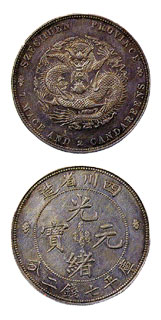
Silver Dollar and Ingot, Qing, A.D. 1644-1911.
American Friends of the Shanghai Museum Confer Chinese Art History Distinguished Scholar Award
New York City, August 11, 2004 — Wai-Kam Ho, curator and scholar of Chinese Art and Asian Culture received the 2004 Chinese Art History Distinguished Scholar Award from Patricia Pei Tang, President of the American Friends of the Shanghai Museum. Executive Director Wang Qingzheng delivered remarks on behalf of the Shanghai Museum, and James Watt, Brook Russell Astor Chairman, Department of Asian Art at the New York Metropolitan Museum of Art introduced Professor Ho to the scholars, directors, patrons and benefactors associated with the American Friends who gathered to honor him.
Professor Ho is the former curator of Oriental and Chinese Art at the Cleveland Museum of Art and Laurence Sickman curator of Chinese Art at the Nelson Atkins Museum in Kansas City, MO, as well as recipient in 1992 of the inaugural Shimada Prize awarded in Tokyo for the Most Important Publications which contribute significantly to the Study of Chinese Art and Asian Culture. In his remarks, Director Wang singled out Professor Ho’s long term scholarly interests and achievements. In his introduction, Mr. Watt related the other half of Professor Ho’s life including his start in America after WWII at Harvard in the Dual Program of Art History and Chinese History followed by an illustrious career of mounting exhibitions and conducting symposia of Chinese art at the Cleveland and Kansas City Museums which attracted scholars from all over. Wai Kam Ho may be, Mr. Watt concluded, the last of the great masters of pure conversation.
In his remarks at the dinner, Professor Ho delivered a defense of connoisseurship, the center of a cultural and intellectual dilemma which has divided the field of art history into bitterly opposing groups over the past twenty years or so, by examining the three components that make up the credentials of an art historian, and providing examples of traditional Chinese connoisseurship that have served him over a lifetime.
Professor Ho was accompanied by his wife, Wai-ching, their daughter Dawn Ho Delbanco and two grandchildren, and their son Kevin Ho and his wife.
The $10,000 Chinese Art History Distinguished Scholar Award and engraved crystal medallion, conferred for the first time in 2002, and now for the second time to Professor Wai-Kam Ho, is awarded to scholars who have made lifetime contributions to the study, exhibition and preservation of Chinese art. Recipients are selected by directors of the American Friends, from among nominations submitted by professional colleagues in academia, museum departmental curators and others who focus on Chinese Art and Art History. Ma Chengyuan, Director Emeritus of the Shanghai Museum received the first AFSM Chinese Art History Distinguished Scholar Award in 2002.
Contact: Patricia P. Tang [or Ann Brownell Sloane] Phone: 212- 861-7799 [or 212-737-1011] Email: absloane@compuserve.com
Wai Kam Ho Photographs, 8/11/2004
Photographs, 8/11/2004
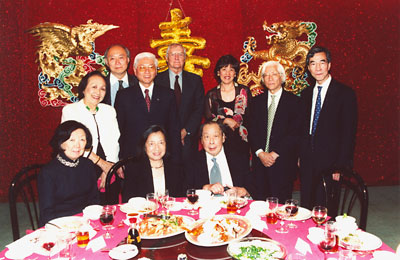
Special guests at the head table.
Back row standing: George Fan, a Director of AFSM; Mark Wilson, Director of the Nelson Atkins Museum of Art in Kansas City, Missouri.
Secong row standing: Diane Woo, a Director of the AFSM, Shau Wai Lam, a Director of the AFSM, Patricia Pei Tang, President and a Director of the AFSM, Executive Director Wang Qingzheng delivered remarks on behalf of the Shanghai Museum; and James Watt, Brooke Russell Astor Chairman, Department of Asian Art at the New York Metropolitan Museum of Art.
Third row seated: Mary Pei, Wai-ching, Professor Ho’s wife; Wai Kam Ho, Recipient of the 2004 Chinese Art History Distinguished Scholar Award.
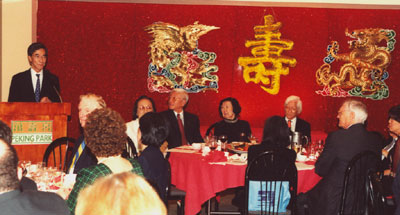
James Watt, Brooke Russell Astor Chairman, Department of Asian Art at the Metropolitan Museum of Art, introduces Professor Ho.
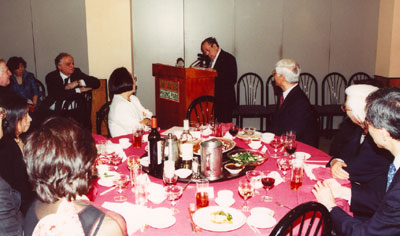
Professor Ho reads his insightful paper on connoisseurship.
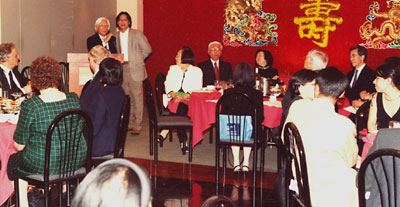
Executive Director Wang Qingzheng delivers remarks on behalf of the Shanghai Museum.
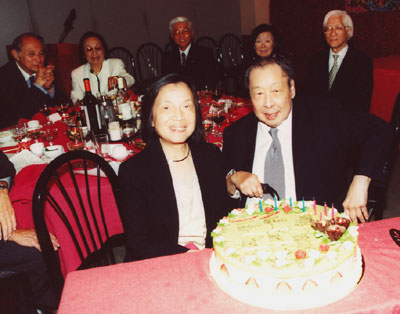
Professor Ho and his wife Wai-ching exclaim over the joint birthday celebration cake, a surprise ending to the Distinguished Scholar Award event.
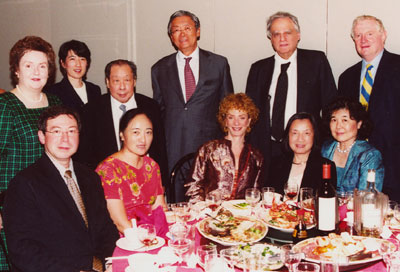
Top left to right: Julia Curtis, Dora Ching, Wai Kam, Henry Tang, Donald Rubin, John Curtis.
Bottom left to right: Richard Wong, Willow Chang, Shelley Frost, Wai-Ching Ho, Helen Little.
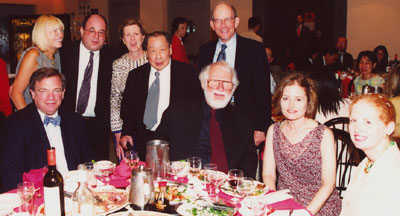
Top left to right: Roberta Lerner, Larry Miller, Ann Sloane, Wai Kam, David Sensabaugh.
Bottom left to right: Robert Poster, Martin Lerner, Elizabeth Brotherton, Amy Poster.
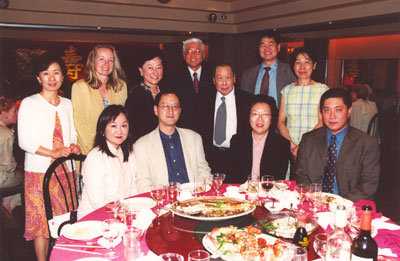
Top left to right: Betty Lau, Carol Conover, Marie & Shau-wai Lam, Wai-Kam Ho, Mr. & Mrs. Chiu Lem.
Bottom left to right: Mr. & Mrs. Arnold Chang, Ruby Cheng, Louis Wang.
Photographs courtesy of Chiu Lem.
Ma Chengyuan Press Release, 10/1/2002
Press Release, 10/1/2002
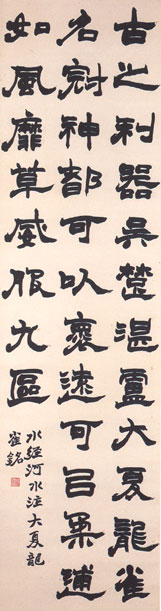
From A Set of Four Wall Scrolls, Zhao Zhiqian, Qing, seal and official script, L. 177 W. 47 cm.
American Friends of the Shanghai Museum Confer First Art History Distinguished Scholar Award
New York, October 1, 2004 — Ma Chengyuan, Director Emeritus of the Shanghai Museum received the first Art History Distinguished Scholar Award from the hands of outgoing President Henry Tang at a dinner attended by the Directors, patrons and benefactors associated with the American Friends of the Shanghai Museum.
In honoring the former director of the Shanghai Museum, Board Director George Fan singled out Director Ma’s long term scholarly interest and achievement in deciphering and commenting on a number of ancient texts written in archaic script on bamboo strips dating from the fourth to third centuries, B.C. Since its acquisition in 1995 by the Shanghai Museum, the Collection of some 1,200 bamboo strips on which are texts of early writing on poetry, music and philosophy, has been the focus of Mr. Ma’s research. This work will throw much light on early Chinese culture and clarify many textual problems in the study of Chinese classics.
Incoming American Friends President Patricia P. Tang explained that the $10,000 Prize and Steuben glass medallion, conferred for the first time in 2002, will be awarded to scholars who have made lifetime contributions to the study, exhibition and preservation of Chinese art.
At the annual meeting held just prior to the Award Dinner, the Board of Directors of the American Friends of the Shanghai Museum discussed the criteria for the Award and plans for selecting future recipients of the Prize.
Contact: Patricia P. Tang [or Ann Brownell Sloane] Phone: 212- 861-7799 [or 212-737-1011] Email: absloane@compuserve.com